Real Wood vs. Poly Plantation Shutters: Pros & Cons
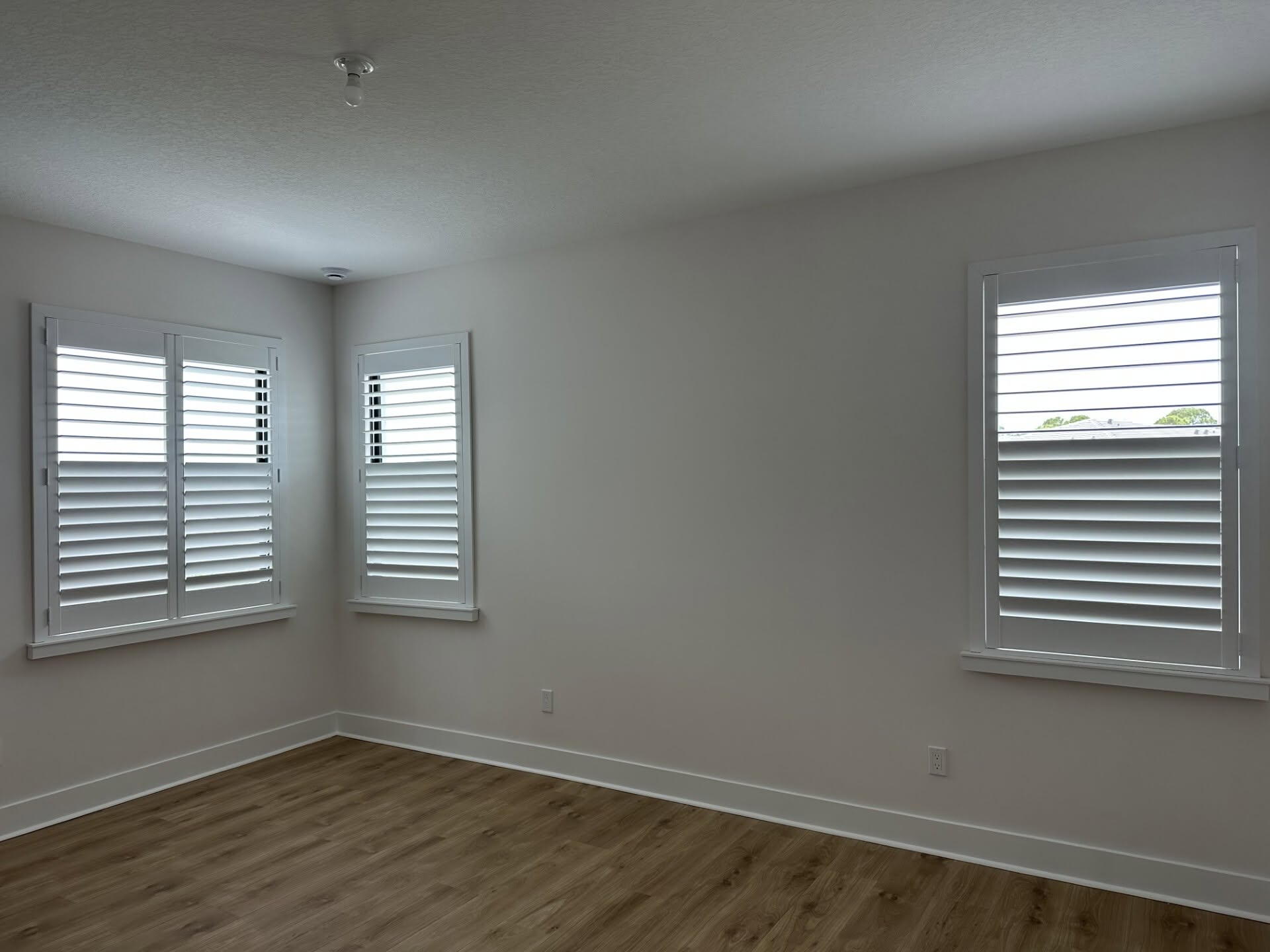
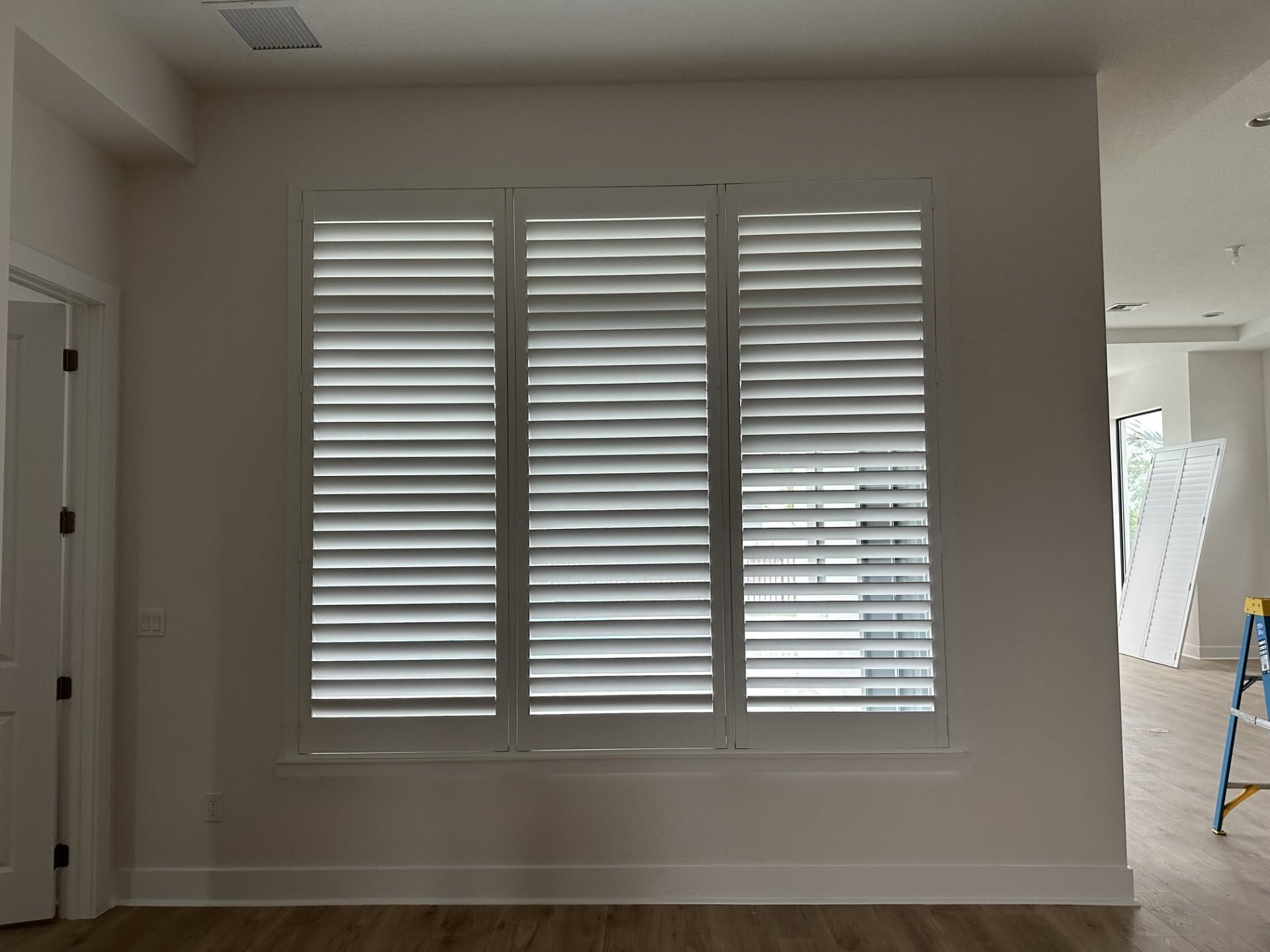
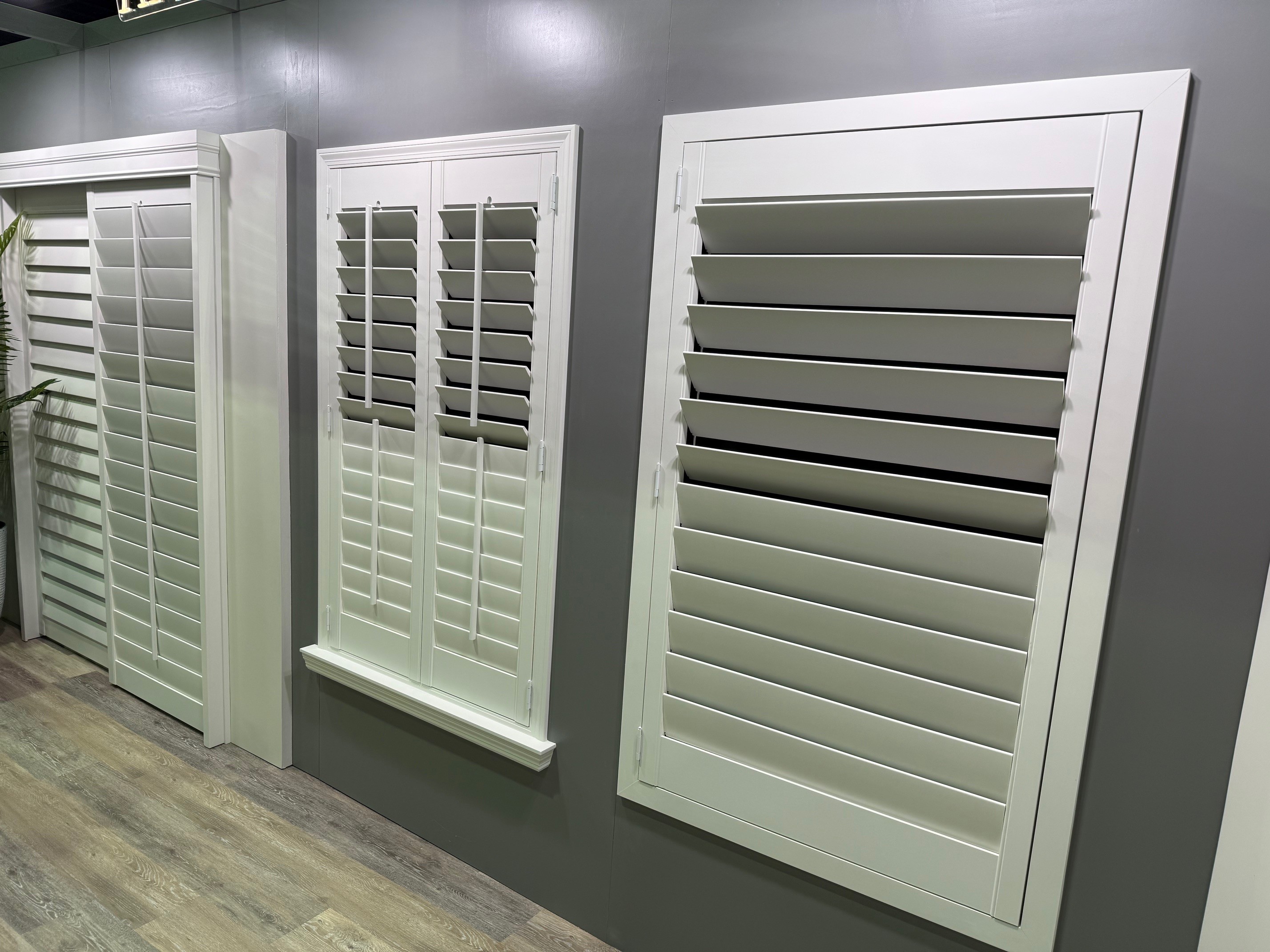
Real wood and poly plantation shutters are often shown in the same white paint color, so they can look surprisingly similar in a small showroom sample. The differences become clearer when the material is turned into a full-size panel, installed in direct sun, opened every day, fitted to a special shape, or repaired years later.
There is no honest one-word answer to “Which material is best?” Real wood is lighter, naturally rigid for its weight, easy to machine into custom shapes, and available in painted or stained finishes. Poly is moisture resistant, easy to wipe down, and provides a consistent manufactured surface. The better choice depends on the exact product, window size, room, design, budget, and the quality of fabrication.
This guide compares the two materials without treating either one as universally superior. It separates measurable differences—such as weight, composition, panel limits, and repair method—from personal preferences about grain, finish, and appearance. There are situations in which either material can be a reasonable choice.
Quick answer: Choose real wood when low panel weight, crisp joinery, stain options, wide-panel capability, special shapes, and long-term repairability are priorities. Consider poly when moisture resistance and simple surface cleaning matter most. In either category, construction quality and proper sizing can matter more than the label on the sample.
First, what does “poly” mean?
“Poly” is a broad retail term, not one standardized material. It often refers to polyvinyl chloride, or PVC, but it may also describe a proprietary polymer blend. Some shutters called poly have hollow components, some have solid extrusions, and some use metal or engineered reinforcement inside rails and stiles. Products marketed as composite may contain wood fiber, MDF, polymer, or a combination.
That variety is important. One brand’s weight, heat tolerance, maximum panel width, finish, and warranty may differ from another’s. Do not assume every synthetic shutter performs the same way. Ask for the actual composition and the manufacturer’s written specifications.
“Real wood” also needs clarification. Species and grade matter. Basswood is widely used for premium shutters because it is stable, machines cleanly, and offers a useful strength-to-weight ratio. Poplar and other hardwoods may also be used. Lower-grade wood, poor drying, weak joinery, or a rushed finish can erase the advantages of a good species.
The fairest comparison is therefore a well-made wood shutter against a well-made poly shutter that is appropriately sized for the opening.
Real wood vs. poly at a glance
CategoryReal wood shuttersPoly shuttersPanel weightUsually lighter for comparable sizeOften heavier; construction variesAppearanceNatural grain; crisp painted or stained finishUniform painted appearanceMoistureRequires a protective finish and sensible careStrong resistance to everyday moistureHeat and sunStable when properly selected, finished, and sizedExpansion and heat limits vary by productWide panelsStrength-to-weight can support broader designsMay need reinforcement or narrower limitsCustom shapesEasy to machine for arches and anglesPossible, but options vary by fabrication systemRepairabilityCan often be sanded, filled, refinished, or remade locallyRepairs may require proprietary parts or replacementStain optionsYesGenerally no authentic wood stainCleaningDust and wipe with a lightly damp clothEasy to wipe; avoid harsh products unless approvedBest fitDesign flexibility, large openings, natural or furniture-grade lookHumidity-sensitive locations and homeowners prioritizing low-fuss cleaning
1. Weight and why it matters
Panel weight is not an abstract specification. A shutter panel hangs from hinges every day. As it opens, its weight creates leverage at the stile, frame, fasteners, and joints. A heavier panel is not automatically defective, but it must be designed, reinforced, and supported for that load.
Real wood—especially basswood—can provide good rigidity without excessive weight. That is one reason it is often used for larger shutter panels. A lighter panel can be easier to open, place less stress on hardware, and require fewer vertical divisions across a wide view.
Poly components can be heavier, particularly when they are solid or reinforced. Manufacturers may manage that weight with additional hinges, internal aluminum, narrower panel limits, or more panels across the opening. Those are valid engineering responses, but they affect appearance and operation.
When comparing products, ask for the maximum recommended panel width and height for the exact material and louver size. If a salesperson proposes an unusually wide synthetic panel, ask to see the written engineering limit rather than relying on a general promise.
2. Appearance and finish
Real wood has grain even when painted. A high-quality opaque finish will soften the visual grain but can still retain the crisp edges and subtle depth associated with milled wood. When stained, the grain becomes a central part of the design. No printed or molded synthetic surface perfectly reproduces the variation of real wood at close range.
Poly offers consistency. The surface is generally smooth and uniform from component to component. That can be desirable in a clean white interior where visible grain is not wanted. Because the color options are commonly factory-defined whites and neutrals, exact matching to existing trim may be more limited.
The finish quality matters as much as the base material. Inspect corners, end grain or end caps, seams, staple or fastener marks, and the back of the sample—not only the front. Rotate the louvers and look for uncoated edges. Ask whether the finish can be color-matched and how touch-ups are handled.
Real wood provides the broadest route to custom paint and stain work. Poly is usually the more predictable route to a standard, uniform painted color. Choose based on whether you want the shutter to act like architectural millwork or like a clean manufactured window product.
3. Moisture and humidity
Poly’s clearest material advantage is resistance to moisture. PVC does not absorb water the way unfinished wood fibers can. That makes poly attractive in bathrooms, laundry areas, and homes where occupants prioritize wet wiping.
But “Florida is humid” does not automatically mean every interior shutter must be synthetic. Air-conditioned living spaces are not the same as exterior exposures or shower enclosures. Properly prepared and fully finished real wood is commonly used in Florida interiors. The key questions are how much direct water the product will encounter, how the room is ventilated, and what the warranty allows.
Real wood should not be soaked, scrubbed with dripping cloths, or installed where it receives repeated direct spray. A bathroom window several feet from a ventilated shower is a different condition from a window inside a shower. If condensation routinely collects on the glass or sill, correct the ventilation or building-envelope issue rather than expecting any shutter material to solve it.
For a high-splash or poorly ventilated location, poly may be the more forgiving choice. For typical conditioned rooms, moisture should be one decision factor rather than the only factor.
4. Heat, sunlight, and dimensional movement
Every material changes dimension with temperature and humidity. Wood expands and contracts across the grain as its moisture content changes. PVC expands with heat. Good shutter design allows for predictable movement and keeps panels within appropriate size limits.
Florida windows can become hot, particularly behind dark-tinted glass or on west-facing elevations. Synthetic materials differ in their heat-deflection properties, reinforcement, color restrictions, and acceptable proximity to glass. Ask whether the warranty has exclusions for excessive heat, certain window films, dark colors, or large panels.
Wood performance depends on species, drying, component selection, finish coverage, and construction. Poorly seasoned wood can move; properly prepared furniture-grade material is far more stable. Painted wood should be sealed on all relevant faces and edges, not only the visible front.
Do not accept blanket claims that one material “never warps.” Any shutter can have alignment problems if it is oversized, poorly built, improperly installed, or exposed outside its design conditions. Product-specific engineering is more useful than a universal slogan.
5. Wide windows and large panels
Large windows are where the weight-to-strength difference becomes most visible. Homeowners often want fewer panels because each additional stile interrupts the view. The design must balance that preference with panel stability, hinge capacity, louver span, and available swing room.
Real wood can often be built into broader panels while remaining manageable, subject to the maker’s specifications. Poly systems may use internal reinforcement to achieve width, but the added material can increase weight. Other systems simply require more panels.
Neither solution is automatically unattractive. Three well-proportioned panels aligned with window mullions can look better than two oversized panels. Ask the designer to show the proposed vertical lines over a photograph or drawing of the window. Compare the view when the louvers are open and the floor space required when panels swing or fold away.
On sliding glass doors and very wide openings, the choice of bypass, bi-fold, or tracked panels may have more impact than the base material. Review the full operating plan through the sliding-door and specialty-shape overview.
6. Arches, circles, angles, and other special shapes
Real wood is highly adaptable in a skilled shop. Components can be cut, shaped, joined, sanded, and finished for arches, triangles, circles, eyebrow windows, and other nonrectangular openings. Louvers can sometimes remain operable within complex geometry, depending on size and design.
Poly special shapes exist, but availability is determined by each manufacturer’s tooling and fabrication method. Some shapes are made as fixed decorative inserts rather than fully operable shutters. Color and louver options may be narrower.
For any specialty window, ask to see completed examples of the same basic shape. Confirm whether the louvers will operate, how the frame follows the opening, where rails and seams will fall, and whether the shutter can be removed for glass service. A computer rendering is useful, but a photograph of comparable work is stronger evidence.
7. Cleaning and routine care
Both materials are relatively simple to maintain. Most shutter care consists of regular dusting with a microfiber cloth, soft brush, or vacuum brush attachment. Close the louvers in one direction, wipe, rotate them, and clean the opposite surface.
Poly generally tolerates a damp cloth well and does not have exposed grain. That is convenient for sticky fingerprints or kitchen residue. Still, harsh solvents, abrasive pads, bleach, and strong degreasers may dull or discolor the finish. Follow the product maker’s care instructions.
Finished wood should be cleaned with a dry or lightly damp cloth and dried promptly. Avoid saturating joints or allowing water to pool on the sill. A durable waterborne finish can make everyday cleaning straightforward, but “waterborne finish” does not mean the wood should be washed with excess water.
Cleaning effort is influenced by louver size, too. Larger louvers mean fewer individual surfaces to dust. A visible center tilt rod adds a small number of contact points compared with a hidden-tilt design.
8. Repairability and future service
Shutters live in active homes. Louvers can be bumped, pets can scratch panels, hinges can loosen, and finishes can be damaged during painting or window replacement. Ask how the material is serviced before a problem exists.
Wood is familiar to millworkers. Small dents may be filled, scratches touched up, hardware reset, and components repaired or remade. A local manufacturer may be able to match the original construction and finish. Severe damage can still require panel replacement, and a perfect color match becomes harder as any finish ages.
Poly repairs depend more heavily on the system. Replaceable pins, connectors, and caps may make small fixes easy. A cracked or distorted proprietary extrusion may require a factory part or a complete component. If a line is discontinued, matching it later can be difficult.
Ask who will service the shutters, whether common parts are stocked locally, and whether the warranty covers labor. “Lifetime warranty” does not necessarily mean free in-home service for every kind of damage.
9. Cost and long-term value
Poly is often presented as the lower-cost alternative, but that is not universal. Brand, reinforcement, freight, panel design, finish, window shape, and installation affect pricing. Entry-level composite may cost less than furniture-grade wood, while a reinforced premium poly system may overlap with wood.
Compare like with like. The quote should identify material, measured square footage, frame, louver size, tilt system, panel count, color, installation, and warranty. A lower total with more vertical panels or a limited color range is a different design, not simply the same shutter for less.
Long-term value includes whether the shutter remains easy to operate, whether the finish fits future decorating changes, and whether it can be repaired locally. It also includes personal preference. A homeowner who values natural material and custom millwork may reasonably pay more for wood. A homeowner who wants a wipe-clean synthetic product for a busy bathroom may get more value from poly.
10. Indoor environment and finish questions
Terms such as “green,” “non-toxic,” and “chemical-free” need evidence. Ask about coating emissions, adhesives, added formaldehyde in engineered components, and curing time. Wood is renewable when responsibly sourced; PVC is durable but petroleum-derived; composites may contain binders and resins. Compare written specifications or third-party certifications rather than marketing adjectives.
Which material is better for each room?
- Living rooms: Real wood often suits wide, highly visible openings and custom finishes; poly works well where a uniform standard color is the priority.
- Bedrooms: Either material can provide privacy and light control. Weight, quiet operation, and room-darkening expectations may matter more.
- Bathrooms: Consider poly in splash-prone locations. Finished wood can suit a ventilated bathroom away from direct water; confirm the warranty.
- Kitchens: Poly is easy to wipe, while wood can coordinate with cabinetry. Faucet and cabinet clearances remain essential.
- Doors and special shapes: Wood’s weight and machinability often help, but verify panel dimensions, hardware, and comparable work.
Questions to ask before choosing
- What is the exact wood species or polymer/composite formulation?
- Is the panel solid, hollow, or internally reinforced?
- What are the maximum panel dimensions for this exact configuration?
- Are any colors prohibited at high-sun windows?
- Can the finish be custom matched or stained?
- How are damaged louvers, stiles, and tilt components repaired?
- Are replacement parts made locally or ordered from a national factory?
- What moisture, heat, and window-film conditions are excluded from the warranty?
- Does the quoted warranty include service labor?
- Can I see a full-size installed project that resembles my windows?
Frequently asked questions
Do poly shutters look like real wood?
Painted poly can resemble painted wood from normal room distance, especially in a simple white finish. Up close, wood usually shows more natural variation and sharper milled detail. Stained wood has a depth and grain pattern that synthetic material does not duplicate exactly.
Are wood shutters a bad idea in Florida humidity?
Not when they are properly made, fully finished, installed in conditioned interior space, and cared for sensibly. Direct water, chronic condensation, poor ventilation, or exterior exposure are different conditions. Discuss unusually wet locations with the maker.
Are poly shutters waterproof?
The polymer material itself may resist water, but a complete shutter can include metal reinforcement, fasteners, adhesives, and hardware. “Waterproof” should not be assumed unless the manufacturer states the whole assembly and installation are warranted for that exposure.
Which material is better for very wide windows?
Real wood often allows broad panels at a lower weight. Some reinforced poly systems can also span wide openings. Ask for product-specific maximum widths and compare how many panels each proposal requires.
Which material lasts longer?
Either can last many years when correctly designed and used. Longevity depends on construction, UV and heat exposure, finish, hardware, installation, and serviceability—not only the base material.
Is real wood always more expensive?
No. While custom wood often carries a premium over entry-level composite, pricing overlaps across brands and configurations. Compare the full specification and installed design rather than the material name alone.
The practical conclusion
Real wood is usually the stronger choice for homeowners who want the lightness, repairability, custom finishing, broad-panel capability, and architectural character of milled material. Poly is a sensible option for homeowners who prioritize moisture resistance, uniformity, and easy wiping—particularly in standard openings and splash-prone rooms.
The most important word in either choice is “well-made.” A thoughtfully engineered poly shutter is preferable to a poorly dried or badly joined wood shutter. A properly built wood shutter is preferable to an oversized synthetic panel chosen without regard to weight or heat. Evaluate the actual product, the actual opening, and the people responsible for measuring and service.
Use this comparison with any provider in Palm Beach, Martin, St. Lucie, or Indian River County. Ask to see a full-size panel, identify the exact material in writing, confirm its maximum dimensions, and test how it opens and tilts. A sample should help you inspect the product; it should not substitute for a specification sheet or a clear panel plan for your windows.