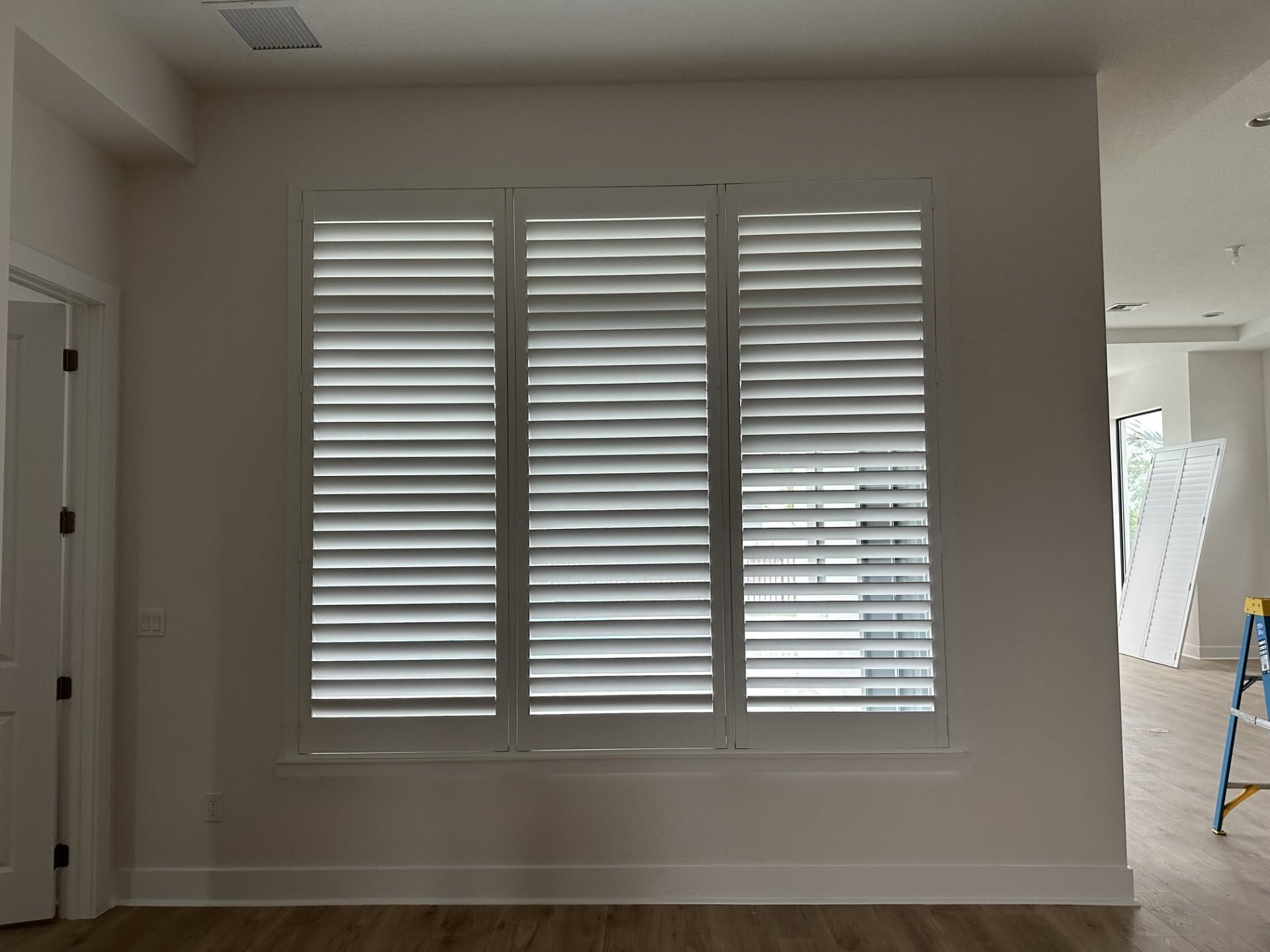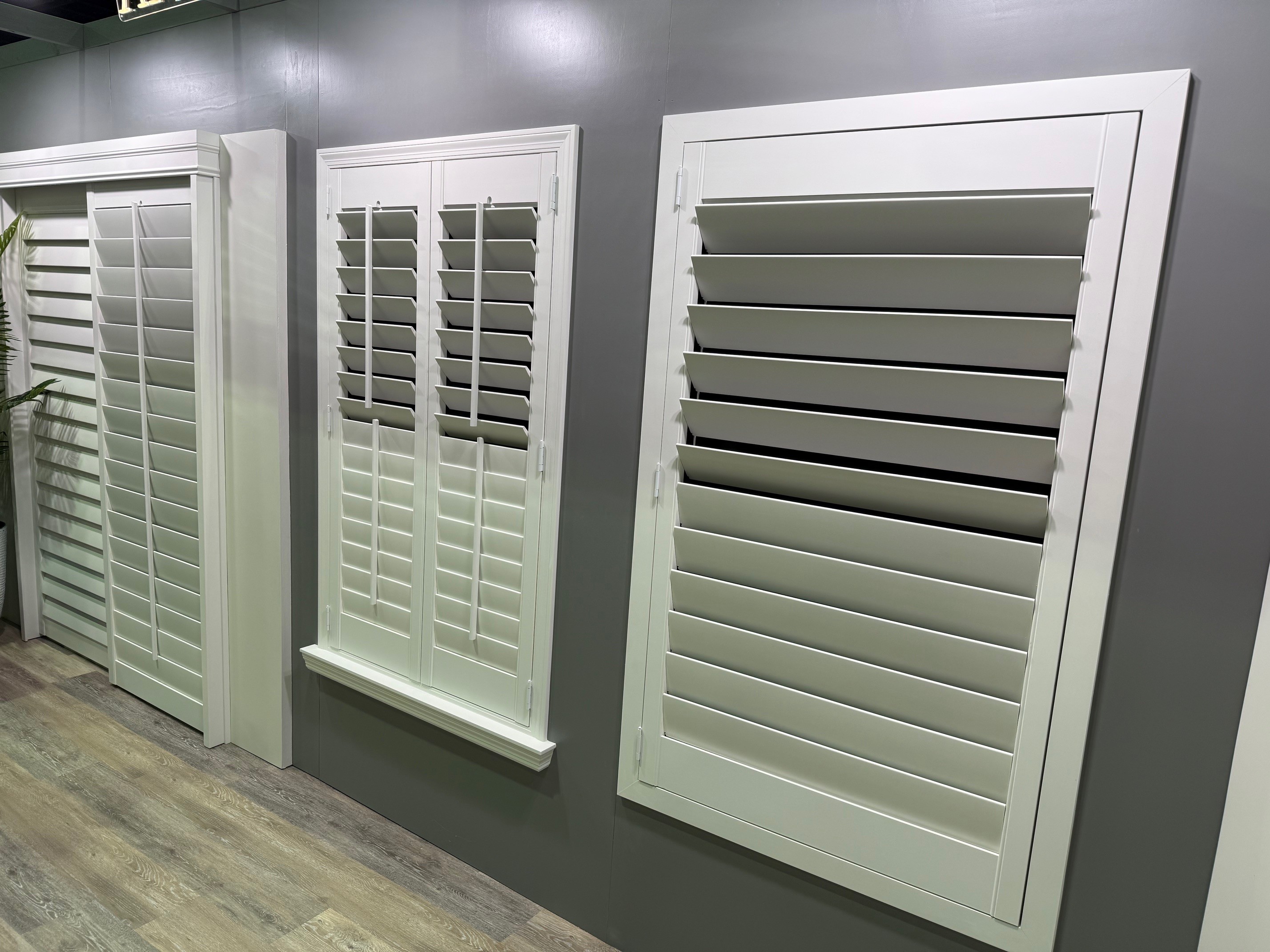
Do Plantation Shutters Keep Your Home Cooler in Florida?
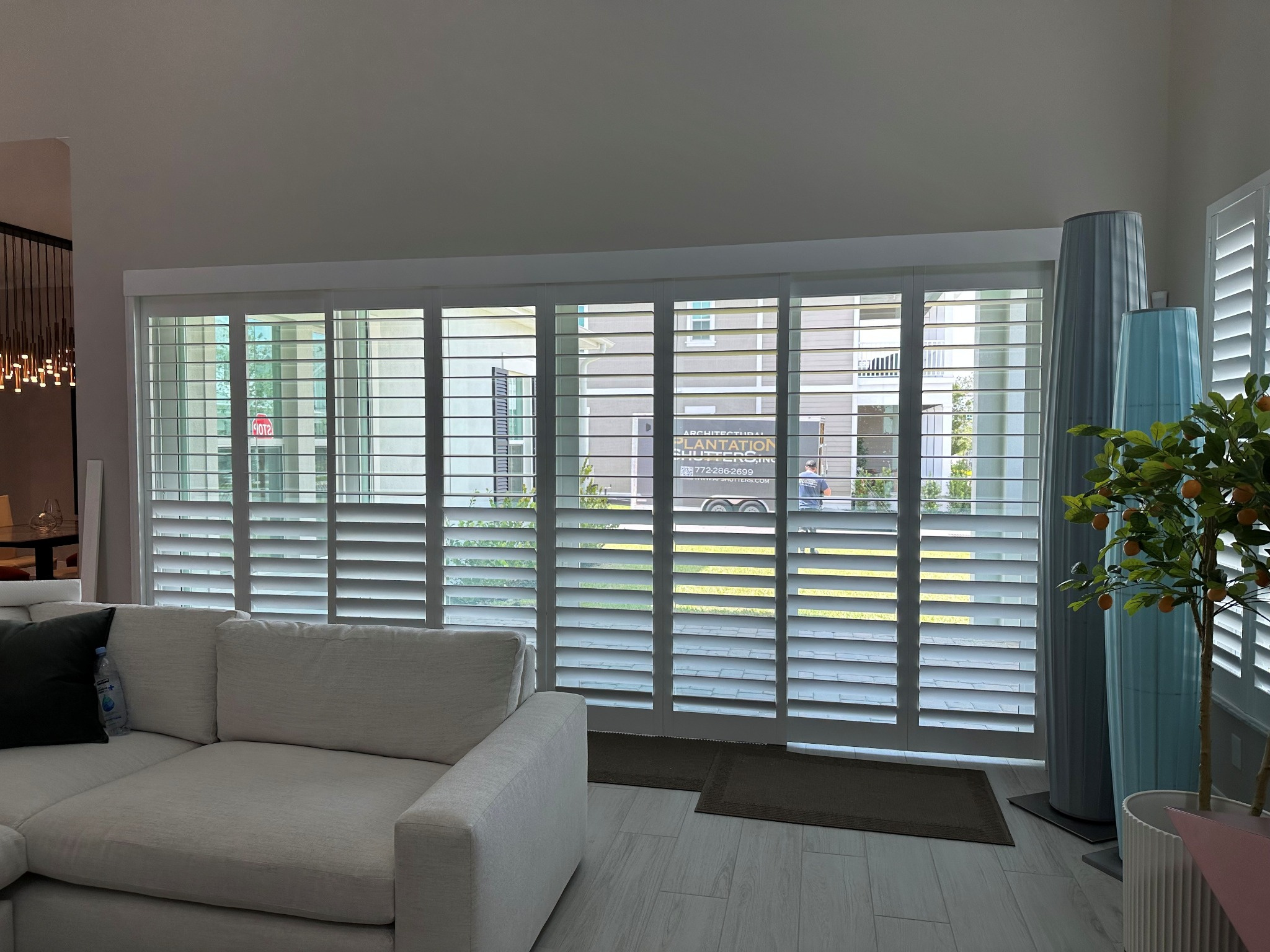
Yes, plantation shutters can help a Florida room feel cooler by blocking and redirecting direct sunlight before that solar energy spreads through the room. Closed louvers also add a layer between the living space and the glass. That can reduce the cooling work associated with a sunny window.
The honest answer needs an important second sentence: shutters do not guarantee a particular temperature drop or percentage reduction in a power bill. Results depend on window direction, glass type, shutter fit, color, outdoor shade, louver position, air-conditioning efficiency, insulation, thermostat settings, and how consistently the shutters are used.
For homeowners in Palm Beach, Martin, St. Lucie, and Indian River counties, the most useful question is not “Will shutters cut my bill by exactly X percent?” It is “Where is heat entering my home, and can better control at the glass reduce discomfort and cooling demand?” This guide explains the physics without inflated promises.
Quick answer: Plantation shutters can reduce unwanted solar heat gain when their louvers are closed against strong sun. They may also improve comfort near the window and help the air conditioner face a smaller heat load. They are one part of a whole-home cooling strategy—not a substitute for efficient glass, sealed ducts, insulation, shade, or a properly maintained HVAC system.
Why windows make a room feel hot
Florida heat reaches an interior through several paths. Warm outdoor air can leak through gaps. Heat can conduct through the frame and glass. Most noticeably, sunlight passes through the glass and is absorbed by floors, furniture, counters, and walls. Those surfaces warm up and release heat into the room.
That is why a room can feel hot even when the thermostat says the air is cool. Your body exchanges heat with nearby surfaces. Sitting beside sun-warmed glass or a hot floor can feel less comfortable than sitting in the center of the same room. Glare also encourages people to close off rooms or lower the thermostat even when the measured air temperature has changed only slightly.
The U.S. Department of Energy recommends energy-efficient window coverings that admit useful daylight while limiting solar heat gain as one way to lower home-cooling demand. “Window covering,” however, is a large category. Product type, fit, operation, and tested performance all matter.
How plantation shutters change heat and light at a window
Plantation shutters affect the window in three practical ways.
1. The louvers intercept direct sun
When strong sunlight strikes a closed or partly closed louver, much of it no longer reaches the room’s floor and furnishings directly. A light-colored shutter reflects part of that energy back toward the glass. The shutter material absorbs some energy and later releases heat to the surrounding air, but the intense beam has been interrupted.
This distinction matters. Once sunlight passes into a room and heats a dark floor or sofa, that energy is already inside the conditioned space. An exterior awning or solar screen can stop more solar energy before it crosses the glass, but an interior shutter still gives the homeowner useful control without changing the exterior.
2. The panel and frame create an added layer
A closed shutter creates a relatively still space between the panel and the window. Still air can slow heat transfer compared with an uncovered pane, especially when the shutter fits closely and the panel is solid around the louvers. Shutters are not sealed insulated windows, and gaps remain at louvers and panel edges, so the added layer should not be described as an airtight thermal barrier.
The effect is usually felt as improved comfort near the glass rather than a dramatic whole-house temperature change. On a bright afternoon, reducing radiant heat and glare at the problem window may allow occupants to remain comfortable without lowering the thermostat as aggressively.
3. Adjustable louvers redirect daylight
Shutters do not have to be fully open or fully closed. Angling the louvers upward can send daylight toward the ceiling while shielding people and surfaces from a direct beam. Angling them the opposite way can protect privacy while admitting light from above. This control can reduce glare and preserve usable daylight, which is more practical than keeping a room dark all day.
Operation is part of performance. A well-fitted shutter left open during the strongest sun does little to limit that sun. A modest window covering used consistently at the right time can be more useful than a high-performance product that is rarely adjusted.
Which windows benefit most?
The biggest improvement is usually found at windows with a clear, recurring heat problem. Walk through the home at different times of day and note where a sharp beam, hot glass, faded flooring, or uncomfortable seating appears.
East-facing windows
East glass receives direct morning sun. Bedrooms, breakfast areas, and offices can become bright and warm earlier than expected. Closing or tilting louvers before sunrise or at bedtime can limit morning heat without requiring action at 7 a.m.
West-facing windows
West-facing glass is often the most difficult in Florida because afternoon sun arrives when outdoor temperatures and household cooling loads are already high. Living rooms, kitchens, and primary bedrooms on the west side may gain the most practical comfort from closed louvers during late afternoon.
South-facing windows
South exposure varies with season and roof overhang. The higher summer sun may be partly blocked by a well-designed eave, while lower seasonal sun can reach deeper into the room. Adjustable louvers allow the response to change with the sun angle.
North-facing windows
North windows usually receive less direct sun, though they still transfer heat and admit bright sky light. Shutters on these windows may be chosen more for privacy, appearance, and glare control than for major solar-heat reduction.
Orientation is only the beginning. Trees, neighboring buildings, porches, window tint, and roof lines can completely change the exposure. Observe the real window rather than making a decision from a compass direction alone.
Does shutter material change energy performance?
Wood and many polymers are less conductive than metal, but the complete window-and-shutter system is more complicated than a single material property. Louver gaps, frame fit, panel thickness, color, window glass, and use influence performance.
A real-wood shutter is a relatively low-conductivity solid layer and can be built into light, close-fitting panels. Poly shutters also form a solid or semi-solid layer and may include hollow spaces or reinforcement. Without tested ratings for the exact products, it is not responsible to assign a universal energy-saving percentage to “wood” or “poly.”
The independent Attachments Energy Rating Council explains that window attachments can regulate heat and sunlight and may reduce heating or air-conditioning demand. It also provides product ratings based on measures such as solar heat gain coefficient, U-factor, and air leakage. Not every louvered interior shutter has an AERC label, so ask for tested product information if energy performance is a primary buying criterion.
For design and durability differences, see the real wood vs. poly plantation shutter comparison in this series.
Why fit matters
Imagine two shutters made from the same material. One is measured closely, framed properly, and closes with even reveals. The other has large gaps, poorly aligned panels, and louvers that sag open. The first will manage light and air movement more effectively.
Fit does not mean the shutter should be forced tightly into an out-of-square opening. A quality installation uses the frame to create consistent alignment while allowing panels and louvers to move. Important details include:
- A frame suited to the depth and condition of the window.
- Even gaps around panels.
- Louvers that close fully and hold their position.
- Panel divisions that do not create unnecessary open seams.
- Careful treatment of bay windows, corners, and grouped openings.
- No interference from locks, handles, or alarm contacts.
Custom measuring is especially important on older Florida homes, where openings may have settled or been altered during window replacement.
Louver position: the free performance upgrade
How you use the shutter can matter as much as which shutter you buy. A simple hot-weather routine is:
- Morning: Close or tilt east-facing shutters before direct sun reaches the glass.
- Midday: Adjust south-facing shutters where sun clears the overhang.
- Afternoon: Close west-facing louvers before the room and furnishings heat up.
- After sunset: Reopen louvers or panels if you want the view and privacy allows.
The goal is to act before the room becomes hot. Once floors and furniture have absorbed solar energy, the air conditioner must remove that added heat over time.
If fully closed shutters make the home too dark, tilt louvers so daylight washes the ceiling rather than striking the floor. Use divider rails to close a sun-exposed lower section while keeping the upper section open. In rooms that are seldom used during the day, simply leave the problem elevation closed.
Can shutters lower your power bill?
They can contribute to lower cooling energy use, but a utility bill is affected by too many variables to promise a fixed savings figure. Weather changes monthly. Electricity rates change. Guests, cooking, pool equipment, water heating, thermostat settings, HVAC condition, and occupancy all affect the total.
A realistic chain of cause and effect is:
Less direct solar gain at a hot window → less heat added to the room → lower cooling load during those hours → potential reduction in air-conditioning energy use.
Whether that potential becomes visible on the bill depends on scale. Treating one small north-facing window is unlikely to transform whole-home use. Managing several large east- and west-facing windows may have a more noticeable effect. Comfort can improve even when the bill change is difficult to isolate.
Be cautious with any seller who gives a universal percentage without knowing the home. Ask what testing supports the claim, what baseline window was used, whether the product was open or closed, which climate was modeled, and whether the percentage refers to heat through the window, HVAC energy, or the entire electric bill. Those are very different measurements.
Shutters compared with other window options
Cellular shades
Well-fitted cellular shades are designed with air pockets that add insulation. The Department of Energy reports strong energy performance for qualifying cellular products. They may outperform typical louvered coverings in tested thermal metrics, especially when side tracks or automation improve fit. Shutters provide different benefits: rigid architectural appearance, highly adjustable louvers, durable panels, and easy access to the window.
Roller shades
Opaque or solar roller shades can be effective at blocking direct sun and disappear into a small headrail when raised. Side gaps can allow light and heat at the edges. Shutters remain visually present but provide more directional light control.
Curtains and drapes
Close-fitting, lined drapery can reduce heat transfer and add softness. Performance depends on fabric, lining, fullness, top treatment, and how closely the drape seals at the sides and floor. Drapery can also be layered over shutters when a room needs both architectural structure and softer décor.
Horizontal blinds
Blinds provide inexpensive light control, but thin slats and open edges generally create less of an insulating layer. They may still reduce direct solar gain when closed.
Window film
Solar-control film can reduce transmitted solar energy while preserving a view. Compatibility with insulated glass and existing warranties must be confirmed before installation. Film does not provide nighttime privacy or adjustable openness by itself.
Exterior shading
Awnings, vegetation, solar screens, and exterior shutters can stop sunlight before it reaches the glass, which is thermally advantageous. They change exterior appearance and may face wind, maintenance, building-code, or association considerations.
Replacement windows
Low-solar-gain glazing and efficient frames address the window itself. Replacement can improve energy, storm, sound, and leakage performance, but it is a much larger project. Interior shutters can complement efficient glass; they should not be presented as equivalent to a complete high-performance window.
A whole-home cooling checklist
Plantation shutters work best as part of a larger plan. If power bills or comfort problems are severe, also check:
- HVAC filters, maintenance, sizing, and thermostat schedules.
- Leaky, damaged, or poorly insulated ductwork.
- Attic insulation and air sealing.
- Weatherstripping around doors and operable windows.
- Unshaded east and west glass.
- Heat from recessed lights, appliances, and pool equipment.
- Indoor humidity and bathroom or kitchen ventilation.
- Rooms closed off from adequate supply and return airflow.
An energy audit can help identify whether windows, ducts, insulation, or equipment are the dominant problem. Coverings are most valuable when they address a real source of heat rather than being asked to compensate for a failing air conditioner or major duct leak.
What to ask when energy performance matters
- Does the product have an independent energy rating for the exact configuration?
- What glass and climate assumptions were used in any savings claim?
- How closely will the frame fit my opening?
- Will the louvers close fully and remain in position?
- Are dark colors restricted on high-sun windows?
- Can the panel layout reduce open seams on wide windows?
- Would a divider rail help me control only the sun-exposed section?
- How will handles, locks, and shallow depth affect the fit?
- Is the room better served by shutters alone or by layering another treatment?
- What result is being promised: less glare, improved comfort, reduced window heat flow, or a utility-bill change?
Frequently asked questions
Do plantation shutters block heat completely?
No. They can reduce direct solar gain and add a layer at the glass, but heat still transfers through the window, frame, shutter, and surrounding wall. Small gaps are necessary for the louvers and panels to operate.
Should louvers point up or down to keep a room cooler?
The best angle depends on the height and direction of the sun. Adjust the louvers until direct beams no longer strike the floor or furniture while useful daylight remains. Fully closing them provides the strongest solar blocking but also darkens the room.
Are white shutters cooler than dark shutters?
Light surfaces generally reflect more incoming solar energy, while dark surfaces absorb more. The full result depends on finish, material, glass, and airflow. Ask about color restrictions at very sunny windows.
Will shutters make an old window energy efficient?
They may improve comfort and reduce some heat transfer, but they do not repair failed seals, missing weatherstripping, rotted frames, or inefficient glass. Address window defects directly.
Can I calculate exact bill savings before installation?
Not from shutter area alone. A reliable estimate would need the home’s window properties, orientation, shade, climate, HVAC efficiency, operating schedule, and utility rates. Be skeptical of a precise percentage offered without those inputs.
Do plantation shutters qualify as hurricane protection?
No. Interior plantation shutters are not impact-rated storm protection. Use code-compliant hurricane shutters, impact windows, or another approved exterior system for severe-weather protection.
The practical takeaway
Plantation shutters are useful because they put a durable, adjustable control directly at the window. Close them before strong sun arrives and they can keep intense beams off interior surfaces, reduce glare, and make the area near the glass more comfortable. Across several high-exposure windows, that reduced heat gain may lower the work required from the air conditioner.
Treat comfort as the first measurable benefit and bill savings as a possible result, not a guarantee. Choose a close-fitting design, operate it with the sun, and combine it with sound HVAC and building-envelope practices.
If heat is the main concern, start with observation before shopping. Note the time direct sun reaches each room, which glass is uncomfortable to sit near, and whether the louvers would realistically be closed during those hours. That short record will tell you more than a universal savings percentage and will make any window-treatment comparison more useful.
Sources and further reading
- U.S. Department of Energy: Energy Saver 101—Home Cooling
- U.S. Department of Energy: Window Types and Technologies
- Attachments Energy Rating Council: Reading the Residential Label
- Attachments Energy Rating Council: Frequently Asked Questions
What our IR camera field readings showed
To make the heat discussion more concrete, we photographed three Palm Beach County openings with a Fluke Visual IR Thermometer. Each photograph shows the point-in-time surface temperature at the spot targeted by the instrument. The readings were lower in the photographs taken with plantation shutters covering the opening:
- Kitchen skylight: 98.3°F without plantation shutters and 89.4°F with shutters—an observed difference of 8.9°F.
- Tall stairway window: 102.4°F without plantation shutters and 84.8°F with shutters—an observed difference of 17.6°F.
- French balcony door: 88.1°F without plantation shutters and 83.6°F with shutters—an observed difference of 4.5°F.
These are useful field observations, not a controlled A/B test. The photographs were taken at different times, and conditions such as sun angle, cloud cover, aiming point, target distance, indoor temperature, and how long the shutters had been in position may have differed. An infrared thermometer also measures the selected surface rather than room-air temperature, the average temperature of the entire opening, insulation R-value, or whole-home energy use. The images therefore help illustrate how controlling direct sun can change a surface reading, but they do not establish a guaranteed temperature drop or power-bill savings percentage.
IR camera photos from the Palm Beach field observations
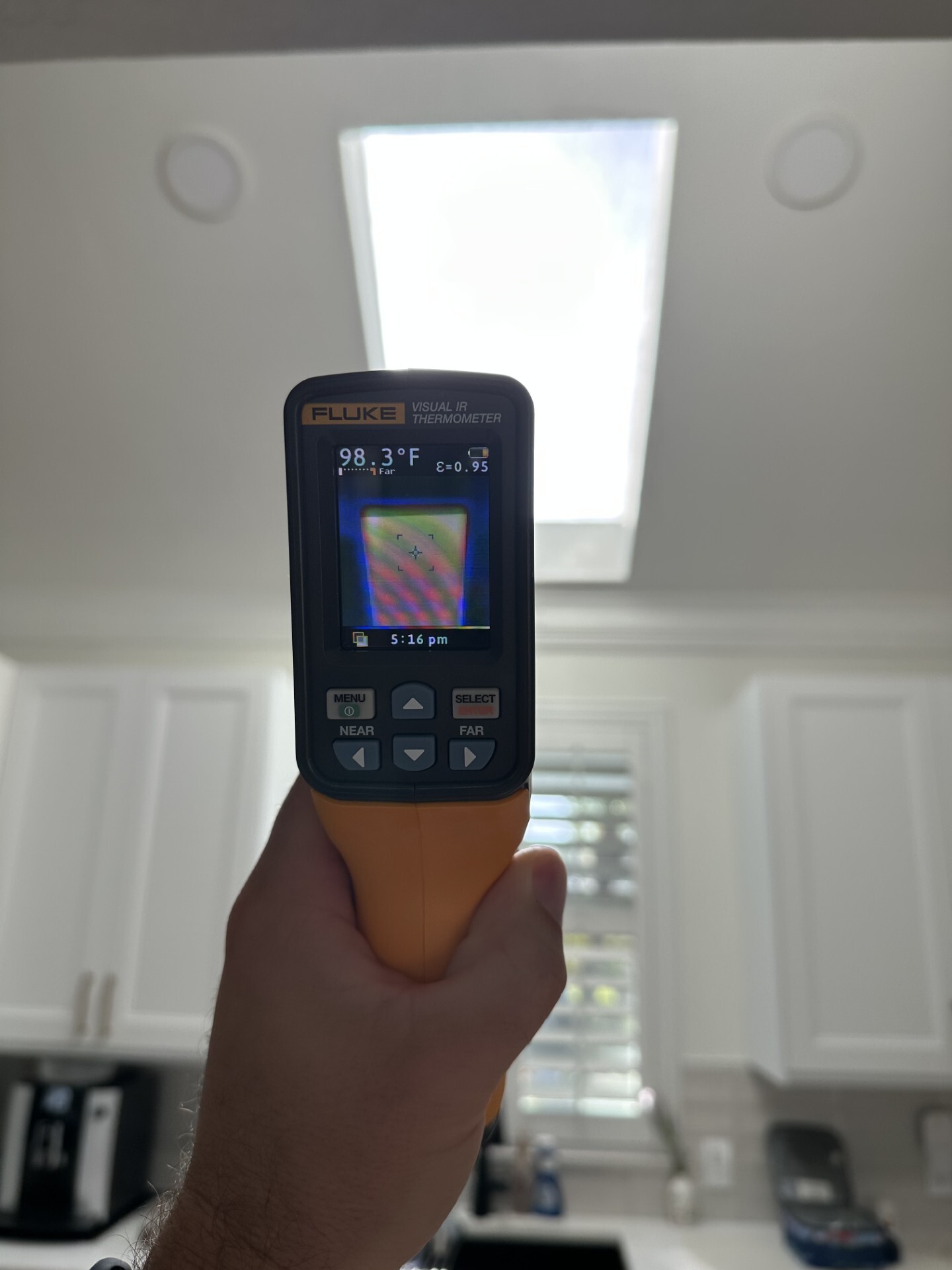
Kitchen skylight without plantation shutters — surface reading 98.3°F.

Kitchen skylight with plantation shutters — surface reading 89.4°F.

Tall stairway window without plantation shutters — surface reading 102.4°F.

Tall stairway window with plantation shutters — surface reading 84.8°F.

French balcony door without plantation shutters — surface reading 88.1°F.

French balcony door with plantation shutters — surface reading 83.6°F.